
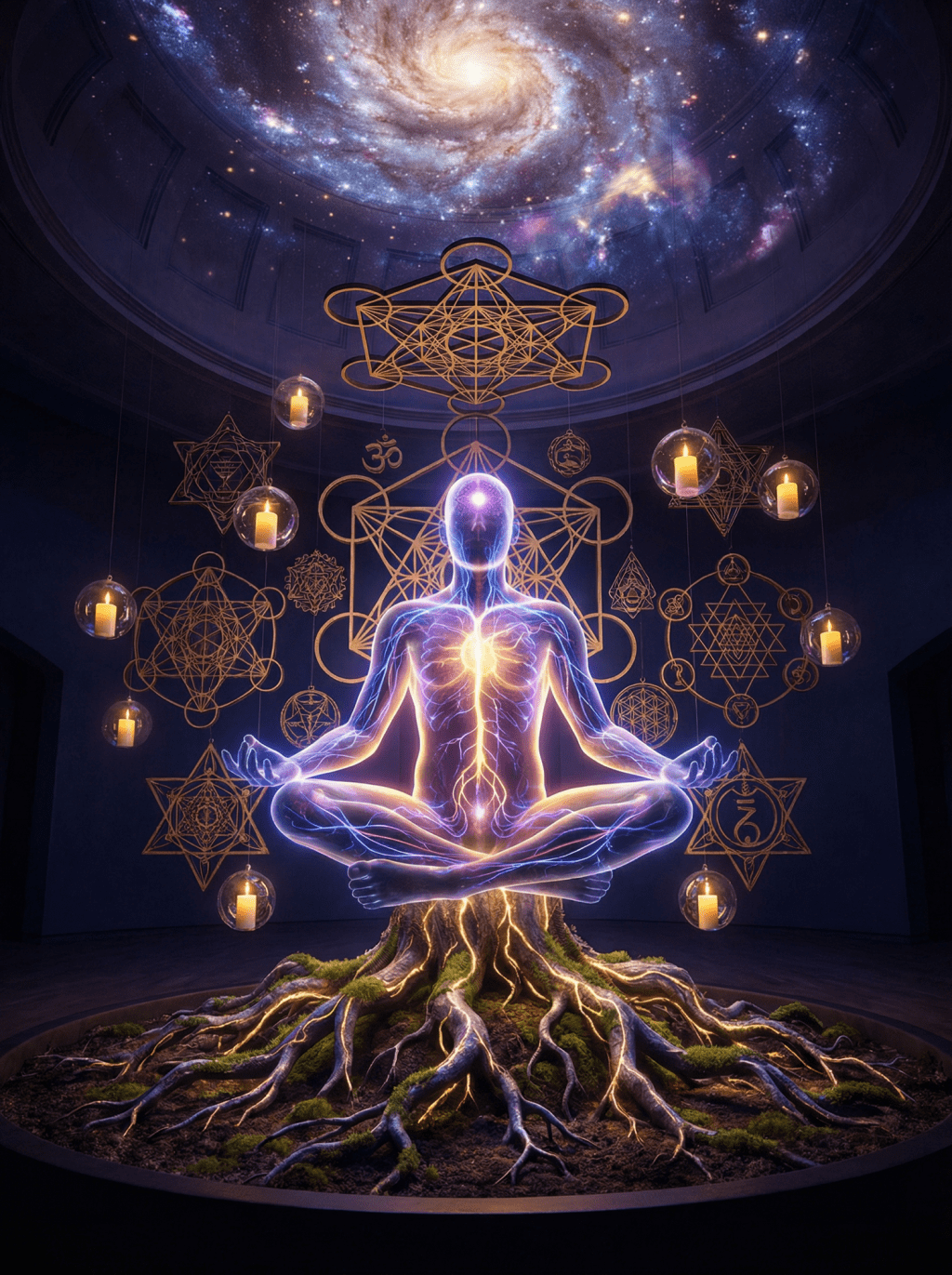
The Statement
It has been scientifically proven that people who engage in rituals and spiritual practices live longer, experience less anxiety and depression, make healthier decisions, recover better from loss, perform at higher levels, and report a significantly greater sense of purpose, connection, and well-being — and the data is overwhelming.
📊 What the Research Actually Shows
🧬 1. Longevity — They Live Longer
A comprehensive narrative review published in the National Institutes of Health (NIH) found that women who attended religious services more than once per week had a 33% lower all-cause mortality rate compared to those who never attended. In a rigorous review of 63 high-quality studies, 75% confirmed that spiritual/religious practices predicted greater longevity, while only 5% found the opposite. Additionally, a sense of purpose — closely tied to spiritual practice — is linked to a 17% reduced mortality risk. NIH/PMC
🏥 2. Better Health Outcomes — Harvard Says So
A landmark 2022 study published in JAMA and led by Harvard T.H. Chan School of Public Health analyzed over 8,946 research articles and concluded that spiritual community participation is associated with:
- ✅ Greater longevity
- ✅ Less depression and suicide
- ✅ Less substance use
- ✅ Higher quality of life during illness
The study called spiritual care “a vital part of whole person-centered health care.” Harvard Chan School of Public Health
🧠 3. Reduced Anxiety & Stress — Even Arbitrary Rituals Work
Harvard Business School researchers conducted a series of experiments proving that rituals directly reduce anxiety and improve performance — even when people don’t consciously believe the ritual will help. Studies published in Psychological Science showed rituals lower cortisol responses, calm the nervous system, and improve outcomes in high-pressure situations like public speaking, competitions, and job interviews. Scientific American
💔 4. Grief Recovery — They Heal Faster
Experiments from Harvard researchers found that people who performed rituals after a loss reported significantly less grief than those who did not — whether the loss was a loved one, a broken relationship, or even something as small as losing a lottery. The act of ritual restores a sense of control and order, which accelerates emotional recovery. Scientific American
❤️ 5. Heart & Physical Health
Research confirms that individuals who engage in spiritual or religious activities tend to have:
- 📉 Lower blood pressure
- 📉 Lower risk of heart disease
- 📉 27% lower cardiovascular mortality (in women who attend services)
- 📉 21% lower cancer mortality
Woodlawn Hospital / NIH Research
🔬 6. The Brain Actually Changes
Neuroscience confirms that meditation and ritual practices physically alter brain structure. Studies of Buddhist monks and general populations show:
- Increased frontal lobe activity (better decision-making)
- Changes in regions linked to memory, self-awareness, and compassion
- A single 7-day meditation retreat produced measurable changes in both brain activity and blood biology
Neuroscience News | Harvard Health
🏅 7. They Perform Better
In sport psychology studies, pre-performance rituals improved attention, emotional stability, confidence, and execution. Even superstitious rituals (like believing in a “lucky ball”) enhanced confidence and motivated greater effort, leading to measurably improved outcomes. Scientific American
🌿 The Bottom Line
The science is clear: rituals and spiritual practices are not just cultural traditions — they are evidence-based tools for a healthier, longer, more resilient life. Whether it’s attending a place of worship, meditating, performing a personal morning ritual, or simply lighting a candle in quiet reflection — these acts activate real psychological, neurological, and physiological changes that protect the mind, heal the body, and anchor the soul.
“Overlooking spirituality leaves patients feeling disconnected. Integrating spirituality into care can help each person reach complete well-being.”
— Howard Koh, Harvard T.H. Chan School of Public Health
 The Realistic Spiritualist
Leave a comment